
Master thesis · 2026
Multimodal HMI warning system
An Android Automotive prototype that uses peripheral visual and tactile feedback to warn drivers about potential collisions, evaluated in a real-world field study.
- Role
- Concept, product and study design, development, data evaluation
- Year
- 2026
- Tools
- Kotlin, Java, Python, LimeSurvey
Abstract
Reducing the number of road fatalities involving human error, especially those including vulnerable groups such as pedestrians, cyclists and motorbikes, calls for an enhanced, peripheral warning system. This work proposes a system to address distracted drivers through timely highlighting of potential collisions. It does so by investigating the benefits of spatially directed, non-symbolic visual stimuli combined with vibrotactile feedback through the implementation of an Android Automotive warning system prototype. A warning system using four different warning modalities is proposed. Focusing on generalizability and practical relevance, the prototype is deployed and tested in a real car, ensuring ecological validity and a realistic and naturalistic environment. Finally, the prototype was evaluated through a carefully drafted user study with 17 participants in a real-world scenario. Driving on a predefined course, participants experienced possible collision events with an inflatable object while they were engaged on a secondary task. Subjective ratings resulted in a preference of the multimodal approach using visual and tactile feedback, though individual remarks differ and entail personalization and individualization options. NASA-TLX workload scores did not differ for the individual modalities. Quantitative driving data showed great effect of anticipatory speed reduction across all warning modalities, with directional visual warnings having the most impact, followed by unimodal tactile feedback. Directional visual warnings show the lowest recorded average in the braking process, multimodal warning the highest. Quantitative gaze data investigation did not yield any significant differences between the individual modalities.
Motivation
Road safety still depends heavily on human attention. Around 1.19 million people die on roads worldwide each year, and approximately 95% of incidents involve human error. This project was developed as part of the FFG-funded roadguard project at Virtual Vehicle, with a focus on improving safety for vulnerable road users such as pedestrians, cyclists and motorcyclists.
Drivers already divide their visual attention between traffic, mirrors, instruments and other distractions. Conventional dashboard symbols and head-up displays require another glance and add to this visual load. The project therefore explored whether peripheral, non-symbolic warnings could communicate danger without demanding another central visual check.
The research questions
The thesis investigates two questions:
- Can directed animations draw a driver’s visual attention toward a particular area of danger?
- Does vibrotactile feedback enhance this directional attention guidance?
Visual interfaces are well suited to directional cues, while non-symbolic feedback can keep cognitive load low. Tactile interfaces can interfere less with driving and communicate urgency through the torso, making a combination of both channels a promising direction.
The prototype
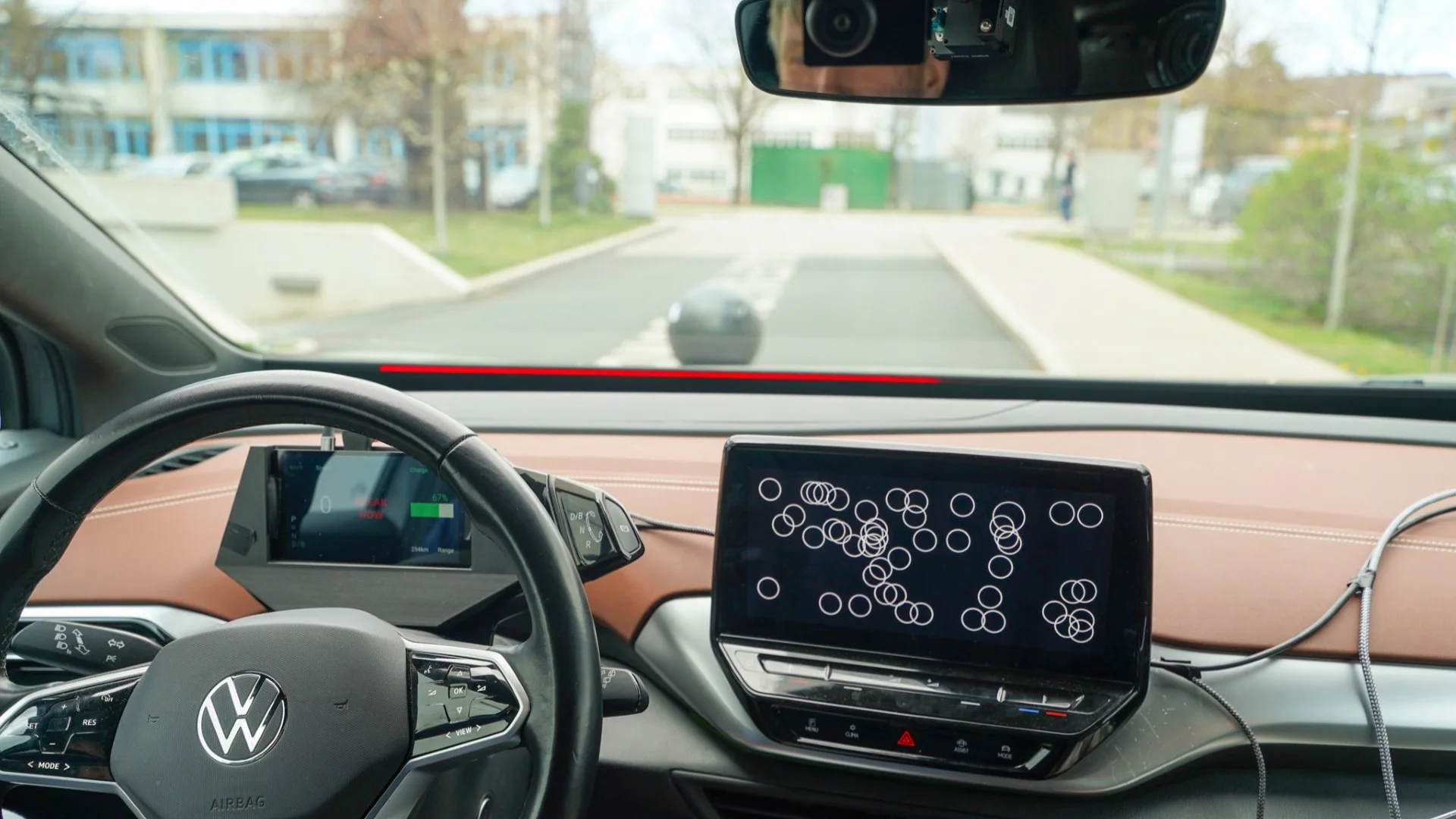
An Android Automotive warning system was designed, developed and installed in a real test vehicle. The prototype combined 54 individually controlled LEDs underneath the windshield, two vibrotactile motors integrated into the driver’s seatbelt, and an instrument-cluster display for context.
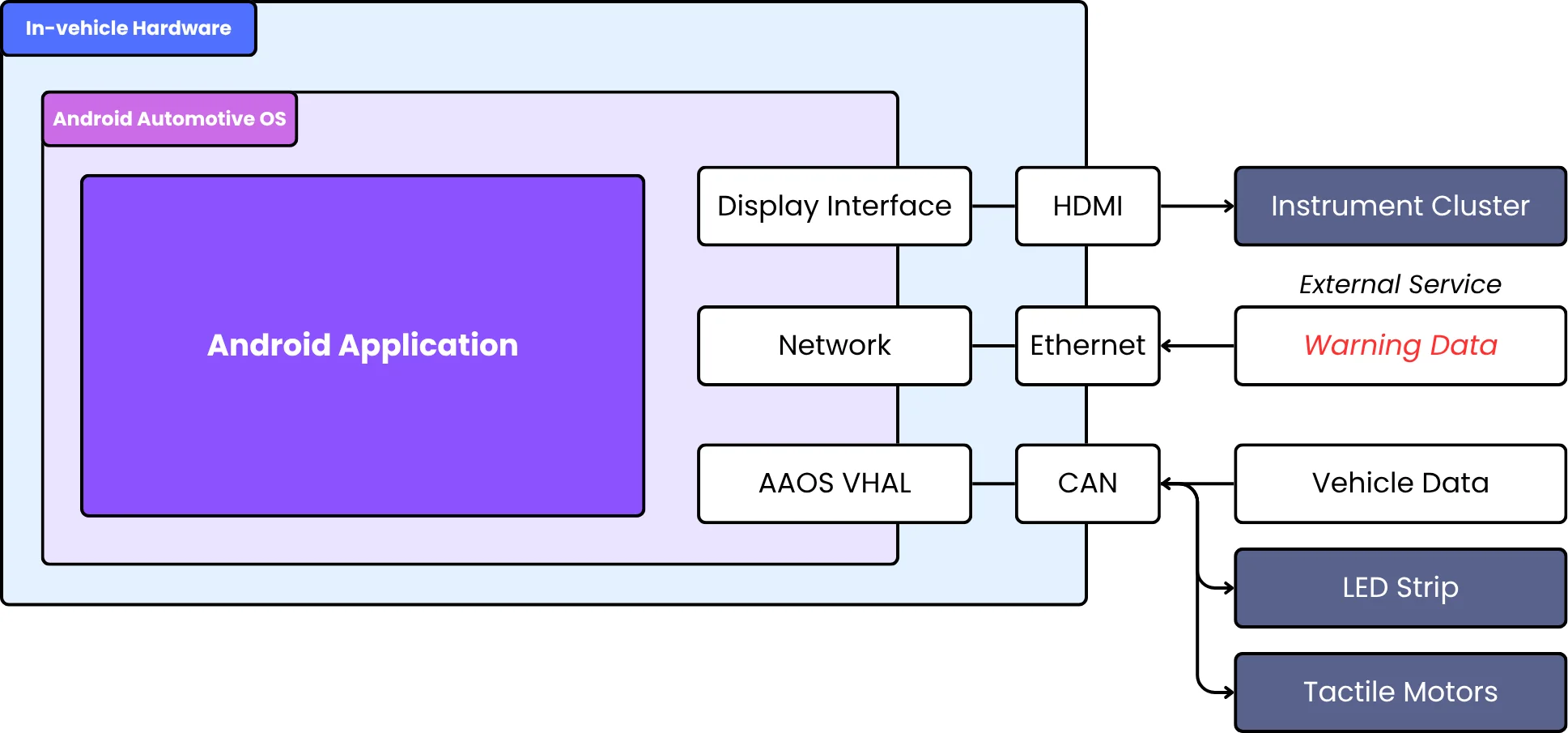
The evaluation compared five warning conditions, including visual, tactile and multimodal feedback. All warnings followed an escalating design with the estimated time to collision.
Field study
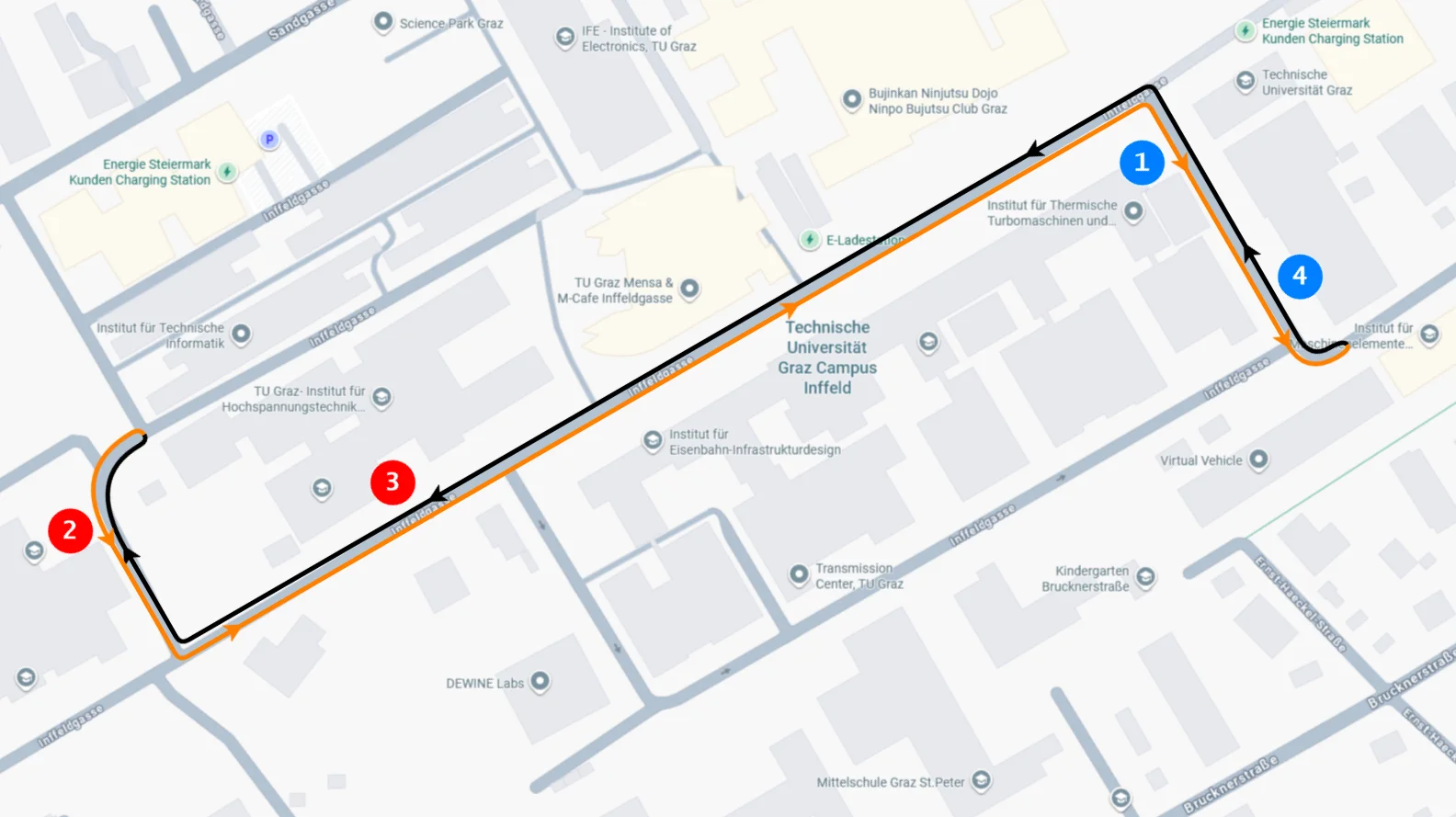
The prototype was evaluated on a campus course with a 20 km/h speed limit on a fixed route. Assistants were instructed to place an inflatable object onto the road on command, switching between four different event locations along the route.
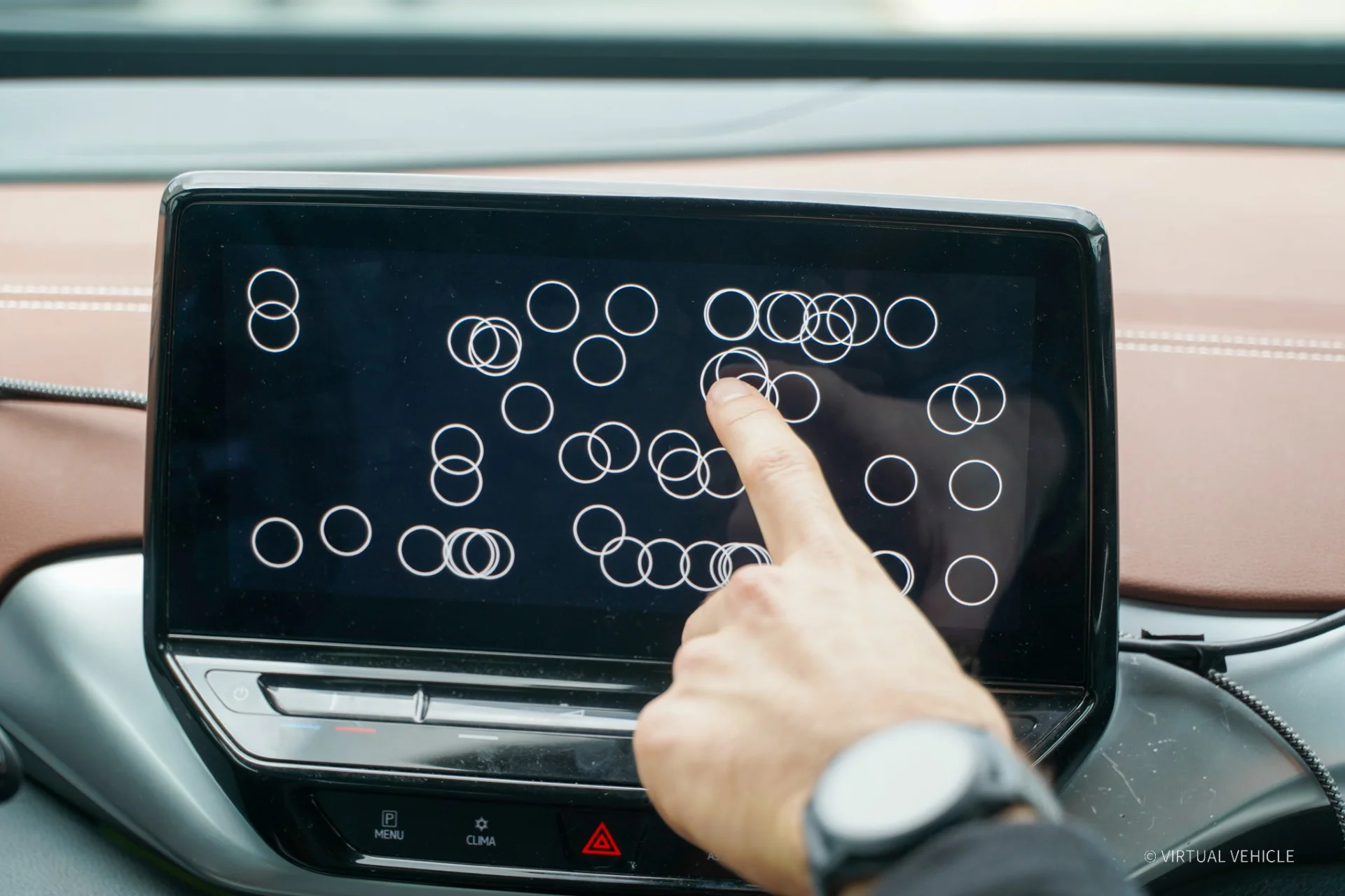
To imitate a smartphone or radio interaction, participants completed a secondary search task on the infotainment display when the warning trigger occurred.
The within-subject study included 17 participants. Each participant completed one round per warning condition and answered a questionnaire after each round.
The study combined:
- driving data, including speed, steering angle and GPS position
- gaze tracking from custom hardware
- NASA-TLX workload, Likert-scale ratings and an Affective Slider rating